
Refineries + process plants
Unit outages, process and power piping, vessel and exchanger work, hot taps, repair scopes, and brownfield execution.
 QUALITY THRU CODE™Contact EPV
Industrial construction · Fabrication · Maintenance
EPV turns complex industrial scope into controlled, field-ready work. The code basis, schedule, materials, inspection points, and turnover requirements are carried from planning through execution so the completed asset and the completed record arrive together.
Work we are built for
Focused on the facilities and systems that keep energy and process infrastructure operating.
Unit outages, process and power piping, vessel and exchanger work, hot taps, repair scopes, and brownfield execution.
Power piping, boiler and HRSG work, tube and drum repairs, equipment setting, platforms, and outage support.
Well pads, tank batteries, produced-water systems, flowlines, gathering systems, skids, civil, and site support.
Compressor stations, pump stations, launcher and receiver sites, metering, mainline tie-ins, and facility piping.
Processing facilities, dehydration, treating, metering, utility systems, structural supports, skids, and modules.
Prefabricated piping, modular assemblies, cooling-water systems, equipment connections, supports, and documented turnover for mission-critical facilities.
Construction and mechanical support for MSHA-regulated surface processing facilities: crushing, screening, conveying, milling, slurry and process piping, pumps, tanks, equipment setting, structural supports, shutdowns, and documented turnover.
Aircraft fueling and de-icing fluid systems, including controlled piping fabrication, modular assemblies, equipment connections, supports, testing coordination, and turnover records. Material traceability, documented welding, inspection records, and customer-specific quality requirements are built into execution.
EPV’s mining-sector scope is surface-facility construction and mechanical support for processing and materials-handling systems. It is not presented as underground mining or production-mining operations.
Capability without the catalog
We organize scope around systems, work packages, constraints, and turnover boundaries—so engineering, procurement, fabrication, field execution, quality, and closeout move as one plan.
Pressure vessels, industrial and data-center pipe spools, aerospace fueling and de-icing piping, mineral-processing piping and chutes, modular assemblies, process modules, structural components, supports, and specialty-alloy work—planned from approved drawings, material requirements, weld maps, and inspection points.
Heavy equipment setting, rotating equipment, piping systems, supports, rigging, alignment, and grouting coordinated through defined work fronts and field-ready packages.
Turnarounds, emergency response, exchanger bundle extraction, hydro-blasting, boiler and exchanger work, repairs, and replacements sequenced around isolation, access, inspection, and return to service.
Welding controls, PMI, inspection coordination, material traceability, NDE, test records, and code documentation linked to the component and drawing they support.
Schedule visibility, installed quantities, open-item control, linked records, and turnover packages developed progressively—not assembled after the field work is complete.
EPV service lines
Our service lines are organized around the work customers need performed and the controls required to complete it—not isolated trades handed off from one group to another.
ASME + National Board
EPV is developing the controlled quality system, demonstrated implementation, Authorized Inspection relationships, personnel qualifications, and shop and field controls required to pursue the following authorizations.
ASME BPVC SECTION I
Manufacture and assembly of power boilers and pressure parts within the scope ultimately authorized for shop and/or field activities.
ASME BPVC SECTION VIII, DIVISION 1
Manufacture of pressure vessels under a controlled quality system and Authorized Inspector involvement within the issued scope.
NATIONAL BOARD · NBIC PART 3
Metallic repairs and alterations to boilers, pressure vessels, and other pressure-retaining items at authorized shop and/or field locations.
Program foundations
Specialized outage services
EPV supports maintenance work that often sits directly on the outage critical path. The scope is planned around access, rigging, cleaning, inspection, repair, and reassembly—not treated as disconnected tasks.
Bundle pulls and reinsertion, channel and head removal, puller setup, rigging, inspection support, repair readiness, reassembly, and torque control.
High-pressure water cleaning for exchanger tubes and bundles, piping, vessels, and process equipment, coordinated with outage sequencing.
FIELD NOTE 003Bundle extraction is an integrated sequence of access, isolation, rigging, cleaning, inspection, and controlled reassembly.
Quality Thru Code™
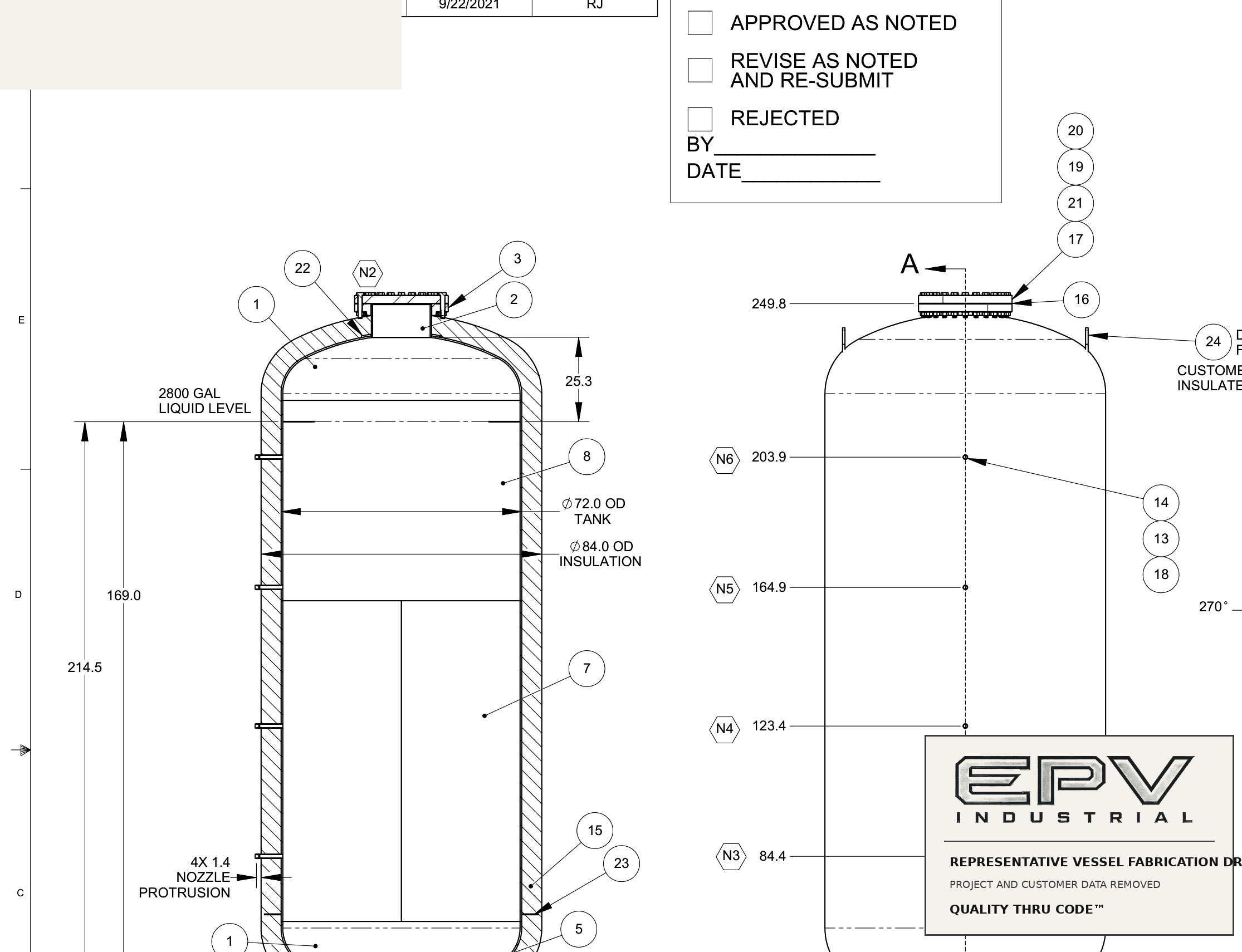
A drawing is not decoration. It is the controlled interface where scope, material identity, fabrication status, inspection, testing, and turnover meet. EPV builds the project record from the same current information used to release and verify the field work.
Integrated execution planning
A strong execution plan is more than a schedule. It defines how scope will be released, built, verified, measured, and accepted—and who owns each decision along the way.
Confirm scope boundaries, code and specification requirements, deliverables, responsibilities, interfaces, and acceptance criteria.
Connect drawings, materials, labor, access, equipment, permits, hold points, and turnover requirements to the schedule.
Work moves forward when prerequisites are satisfied, current documents are available, and constraints have an accountable owner.
Installed quantities, material identity, weld status, inspections, tests, redlines, and open items are captured as the work progresses.
Reconcile records, resolve exceptions, complete testing, and assemble accepted turnover packages progressively with the work.
FIELD NOTE 002If the field cannot see what is ready, what is constrained, and what proves completion, the plan is not finished.
Before mobilization
Mobilization should confirm more than manpower and equipment. It should establish the work face, current information, inspection sequence, material readiness, and the records required for final acceptance.
Discuss project readiness →QUALITY THRU CODE™Tell us the project location, scope, schedule window, and known requirements. We’ll follow up to discuss drawings, specifications, and the execution path.